Showing posts with label location. Show all posts

Wednesday, December 21, 2011

5 Retail Trends Driving Wi-Fi

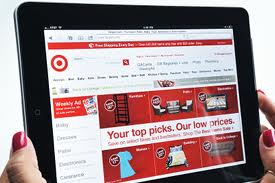
Mobile shopping often requires in-store Wi-Fi
Retail Wi-Fi networks have long been dominated by inventory management applications and services that enabled a more productive workforce and leaner operations. However, brick-and-mortar retail is being disrupted due to the explosive growth from pure e-commerce competitors offering [often] lower prices and a more personalized shopping experience. In addition, the e-commerce sales channel offers deeper product information, community reviews, and greater levels of localization and customization that resonate with consumers.

Brick and mortar retail must adapt to compete in this new environment. A key component of this adaptation is delivering new IT solutions while leveraging the physical assets of the storefront, mixing the benefits of in-store product "touch-and-feel" with the personalization of e-commerce shopping. Merging these two worlds together will create an enhanced shopping experience through the use of mobile Internet devices, often connected through Wi-Fi networks.

Here are 5 retail trends that are driving Wi-Fi growth and new capabilities in retail organizations.
  1. Consumer Interaction and Business Analytics
    Physical retailers have the most influence over consumer purchase decisions in the store, when they are standing in front of the product they are weighing whether or not to buy. Historically, this has been through in-aisle marketing and signage. However, customers are increasingly equipped with mobile Internet access and turning to external sources of information in real-time while within a retail store. This has been coined the emergence of the "smart shopper". These external sources of information are much more comprehensive than what the retailer can provide through traditional in-aisle marketing and signage, and this leaves the physical retailer at a big disadvantage.

    Physical retailers are turning to multi-channel initiatives to enable in-aisle consumer interaction on mobile devices. Multi-channel is the broad alignment of in-store, online, and mobile retail channels into a cohesive experience and set of services for the consumer. It can also include mail-order, catalog, and telephone channels as well. This is accomplished through cross channel integration of back-end systems for product information, inventory, pricing, promotions, order fulfillment, and unified CRM (customer relationship management) systems for a complete view of the customer across all channels. It provides conveniences and benefits for the consumer such as consistent pricing, ship-to-store, ship-to-home, expanded assortment, unified checkout (in-store and online product), list and gift/wedding registry management, and more.
  2. The emergence of the "smart shopper"
    Guest Wi-Fi is a key enabler of in-store multi-channel initiatives to interaction with consumers on mobile devices. It enables the retailer to provide guests with an avenue for Internet access, product research, and broader access to the retailer's website and mobile applications, which can often be richer and more personalized than what can be offered in-store. Cellular connections can also provide this access, but coverage is typically poor inside most retail stores. Wi-Fi is preferred over cellular because it is owned and operated by the retailer, and provides reporting insight into consumer behavior and rich business analytics including mobile platform usage, web destinations, and product research. These analytics allow retailers to better understand consumer desires, tailor in-store product assortments, focus marketing campaigns by location, personalize marketing and promotions to individual shoppers, and quickly identify changing consumer and market trends to allow faster adaptation.
    Digital wallets can improve retailer
    "wallet share" and brand loyalty

    Mobile payment and digital wallets can also be provided to allow consumers flexibility in payment options at point of sale. In lieu of a large hardware investment by retailers in touch-to-pay (contactless payment) solutions at the register, mobile payments can leverage mobile applications and guest Wi-Fi data connections to provide similar services at a fraction of the cost. And digital wallet solutions allow retailers to maintain "wallet share" for brand loyalty cards. How many times have you signed up for a retailers rewards card, only to find your wallet too thick, remove cards to save space, and end up without the card when making a purchase?

    Imagine walking into a store, automatically connecting to Wi-Fi to easily research products, pricing, and availability, receiving personalized shopping offers on your phone tailored to your shopping history (if you're a loyalty customer) as well as tailored to your location within the store (leveraging location based services). Or perhaps you've scanned a 2D/3D barcode on a product to retrieve additional information on the website and being presented with a coupon in real-time for that very product. Retailers are betting that consumers will be interested in these types of services, which may sound invasive to privacy today, but may become normal in the not-too-distant future. Retailers will need to strike the appropriate balance between privacy concerns, use of consumer opt-in (not opt-out), appropriate use of data, and appropriate levels of consumer interaction to be successful.

    There is often a fear that allowing competitive research that will negatively affect retail sales. However, consumer research and analyst predictions have shown that retailers do not need to have the lowest price as long as they are competitively priced or convenient:
    Deloitte predicts that in 2011, 25 percent of North American big box and anchor tenant retailers will begin offering free in-store Wi-Fi access to shoppers... [and] cellular signals can be highly variable: weak signals and low speeds are common, especially deep inside a store. Without Wi-Fi, the in-store online experience is often frustrating and dissatisfying… When shoppers do in-store online comparison shopping, preliminary and anecdotal evidence suggests the likelihood of purchasing appears to go up, not down. A common reason why shoppers do not make a purchase is that they are paralyzed by the lack of knowledge: “is this item available elsewhere for a much better price?” When an online search reveals that competitor’s prices are similar, many shoppers proceed with the purchase at the store they are in, rather than drive around just to save a few dollars.
    - Source: Deloitte (also see this video presentation)
    Digital interaction with the consumer through mobile platforms enables retailers to remain competitive and continue to influence purchase decisions where they matter most, in-store. Multi-channel initiatives blend the personalization and convenience of shopping online with the touch and feel of physical products in the store; it allows the retailer to leverage their physical assets most effectively. Wi-Fi will be at the epicenter of this change.

  3. Empowering Sales Associates
  4. Given the increasingly connected and smart shopper, consumers now have more product information than in-store sales associates in many cases. Yet sales staff are key to providing a great consumer experience in-store. Retailers need to empower sales associates with the depth of product information that consumers have, and to provide additional tools that facilitate existing and new services offered by the retailer.

    Historically, only a fraction of retail sales associates have been provided with mobile devices, and those devices have enabled only a limited set of  capabilities such as stocking, inventory management and product availability. One reason for this is the high cost of ruggedized mobile devices for use in retail. A typical high-speed scanner PDA can cost well over $1,200 each. In order to provide every sales associate with more information to help consumers, retailers are adopting lower-cost, feature-rich, smart mobile devices that provide more robust capabilities than specialized scanners. Mobile platforms built by Apple, Android, and third-party manufacturers are enabling this shift, along with a retail IT focus on enabling business processes in a more flexible, consistent, and re-usable fashion.

    Smart mobile devices and apps can empower sales associates

    Leveraging these smart mobile devices, retailers are rolling out new services such as expanded-aisle and mobile POS (point-of-sale). Expanded-aisle capabilities allow sales associates to easily retrieve additional product and assortment information for consumers from the retailer's back-end systems, show consumers rich media content such as videos and product demonstrations, send the consumer more information to their mobile phone or email in real-time, and seamlessly integrate with the retailer's e-commerce website to facilitate checkout and payment activities. Mobile POS capabilities allow the retailer to provide a better customer checkout experience in many situations. These include faster checkout for small basket sizes, flexible checkout locations throughout the store, easier checkout for large bulky items (e.g. furniture, appliances), electronic receipts, and relief of line congestion during peak hours without dedicating floor space to more register lanes.

    Empowering sales associates with smart mobile devices on a larger scale than before will require a robust, well-designed Wi-Fi network that can handle greater capacity and is highly reliable. Like the old political slogan "a chicken in every pot," retail is adopting "a mobile device in every hand!"

  5. The In-Store Digital Experience
    The in-store experience is critical to connecting and engaging customers with relevant merchandise and marketing information to capture their attention and turn browsers into buyers. Increasingly this means replacement of printed signage with one-way or interactive digital solutions that provide real-time, dynamically updated content that can be roll out in minutes or hours, instead of days or weeks.

    Retailers are deploying one-way digital signage and electronic shelf labels in aisles and on end-caps, which can be updated immediately once changes have been decided by corporate staff, replacing long lead times for printing and distribution of paper signage materials. Digital signage is expensive, cannot be placed at every desired location, and locations requirements will change seasonally with product. Therefore, these systems will require portability. Running Ethernet cabling to every possible location is also not financially attractive, so these systems will rely on Wi-Fi networks for management, monitoring, and content retrieval. Interactive digital kiosks are migrating from fixed location solutions to mobile solutions as well.

    Connected electronics require Wi-Fi for
    product demonstrations and consumer interaction

    Connected electronics allow retailers to showcase Internet-connected consumer electronics capabilities and increase sales. Consumer devices such as televisions, DVD/Blu-Ray players, gaming systems, music systems, computers, tablets, and smartphones are integrating more digital content and streaming services as core product features which drive differentiation and purchase decisions. Retailers will need to connect these devices to in-store Wi-Fi to demonstrate these capabilities to consumers to enhance the shopping experience. At the same time, provisioning and management of these devices will be challenging due to their lack of enterprise features, high churn rate (as product assortments change), and necessity for well-developed in-store processes and staff training.

  6. Expanding Branch Office Services
    In order to remain competitive, retail organizations must deliver better customer service in their physical stores. This is accomplished by migrating away from traditional lean-branch operational models focused on cost reduction to a more sophisticated service-rich operational model within the store. Deploying integrated and context-aware services into the store for both sales associate and customer use will translate into a better shopping experience, return visits, and brand loyalty.

    New services such as robust wireless telephony solutions can enable better availability and improve responsiveness of sales associates for customer assistance by tying service desks to every associate in real-time, as well as provide push-to-talk integration for integrated in-store communications. Digital video services over wireless enable increased security by providing real-time video feeds to in-store security personnel, and can enable videoconferencing for merchandise planning and collaboration with headquarters staff. Location based services allow retailers to provide relevant services to customers, such as targeted promotions that appeal to today's cost-conscious consumer or in-store navigation (wayfinding) to improve the customer shopping experience. Location services will also require the Wi-Fi network to be deeply integrated with back-end marketing systems, making it more integral to core retail business operation.

    Traditionally, these types of services were only available within campus networks due to the cost of deployment into highly distributed branch offices. However, virtualization and deeper integration between network and application architectures are making these services available for branch offices at more reasonable costs.

    Increasingly, retail Wi-Fi networks are providing more intelligent capabilities rather than serving as a basic network access mechanism. As a rich source of real-time and context-aware data, retailers are exposing Wi-Fi network information through APIs for consumption by broader enterprise services and applications. Wi-Fi networks are becoming highly-integrated with core business systems.

  7. High Availability
    The modern retail branch Wi-Fi network must be highly available, even more so than the wide-area network (WAN) circuits back to the main office or data centers. This requires site survivability without loss of functionality. Survivability of historically centralized services such as directory, RADIUS, DHCP, and DNS will need to be to in place to prevent failure of local network connections and applications, service outages, loss of business functionality, and impact to core retail business operations.

    High availability can be accomplished either through deployment of centralized services down to each branch or by installation of an intelligent wireless network. Deployment of services to each branch can be a very expensive undertaking, requiring physical or virtual server deployment, licensing, maintenance, data replication, higher WAN bandwidth, and extensive growth of management and monitoring tools for these distributed services. Alternatively, an intelligent Wi-Fi network can dynamically adjust for the loss of central services and provide site survivability for a period of time until those services can be restored. It can accomplish this through a robust software feature set that integrates RADIUS, provides credential caching with directory services, and dynamically monitors central services to intelligently transition to local network survivability when required. What's better is that this functionality is built into the network and doesn't require deployment of additional hardware, software, or management tools.
Revolution or Evolution? – Andrew’s Take
Modern retail branch wireless networks must provide a high capacity, performance-rich, distributed, scalable, highly available, and stable architecture that also provides intelligent, context-aware services that integrate directly into back-office merchandising, marketing, and analytics systems. Wi-Fi networks are migrating from a best effort inventory focused service, to a core retail business enabler that demands much higher performance and service levels. Along with this shift, business partners and key stakeholders will take a much more involved and active role in determining network requirements to support core business capabilities. IT organizations must understand and navigate this change effectively to be considered business partners rather than an inflexible organization the business teams will seek to bypass.

Cheers,
Andrew vonNagy

This article originally appeared on the Cisco Mobility blog as a 3-part series (Part 1, Part 2, Part 3).

Wednesday, March 9, 2011

5 Reasons Why Retail Needs Wi-Fi RTLS

I recently read an article on 5 Reasons Why Your Hospital Needs Wi-Fi RTLS. Historically, RTLS has been justifiable for hospitals which have very expensive mobile assets that are in high-demand and need to be found quickly. Likewise for providing high-quality patient healthcare through efficient operations with staff and patient workflow.

However, the justification and ROI for indoor location based services (LBS) in retail is a bit harder to quantify. This is becoming easier as mobile commerce and digital guest interaction models are now emerging as primary channels in the retail store of the 21st century. As a foundation, retailers are looking at deploying guest Wi-Fi services. I previously wrote about the reasoning for providing guest Wi-Fi in the Consumerization of Enterprise Wi-Fi.

In addition to guest Wi-Fi, retailers should be investigating Wi-Fi RTLS use-cases for the following benefits:

5. Mobile Device Inventory Tracking
Retailers have long-standing Wi-Fi networks providing labor expense reduction through mobile inventory management solutions. Managing a fleet of mobile devices in-store, including scanners, PDAs, and phones can be challenging. Wi-Fi RTLS can aid retailers in determining device utilization for accurately scaling the quantity of devices required in stores, and reduce device support expenses by locating lost / mis-placed devices and reducing device repair costs through better operational management.

4. "Expert" Location Tracking
Wi-Fi RTLS can enhance the in-store guest experience and satisfaction by teaming in-store experts with guests quickly and efficiently. When guests have questions they do one of two things: 1) Seek a in-store sales clerk that can (hopefully) answer their question, or 2) Provide self-help by turning to a personal mobile device to perform on-the-spot research. With the volume of SKUs carried in stores, the complexity of many modern products, and the specialized skills required for many do-it-yourself tasks, finding an expert to provide guidance is increasingly valuable to the retailer. Providing that "expert" advice to guests can provide assurance of product quality and aid in determining the appropriate product selection, translating into a higher likelihood of same-day sales. I like to call this The Home Depot model.

3. Guest In-Store Navigation
Providing guests with site-specific product location with store navigation maps (typically in mobile apps) can increase guest satisfaction by allowing them to quickly find the product(s) they are seeking. In addition, changes in store layout and stocking due to seasonal variances can be updated quickly when in digital form and provide more accurate information.

2. Business Analytics
Understanding consumer habits and trends is part of the core retail merchandising strategy. Wi-Fi RTLS can provide enhanced business analytics with insight into customer travel paths in-store, dwell times, effectiveness of in-store signage, and provide immediate feedback allowing the retailer to more quickly adjust strategy based on observed guest patterns.

1. Guest Interaction and In-Aisle Marketing
Research has long indicated that around 70% of the consumer purchase decision making process is made in-aisle while evaluating the product. Retailers have traditionally focused on engaging guests through in-aisle signage, but increasingly guests are turning to digital information research to influence their decisions. It is imperative that retailers engage guests through mobile applications to compete against web-retailers. Wi-Fi RTLS can enable retailers to provide highly localized product promotions and information to guests, and when coupled with opt-in brand loyalty programs can also provide highly relevant marketing based on knowledge of the individual consumer shopping habits.

Ultimately, retailers will need to determine the business strategy surrounding customer interaction, customer service, and corporate mobile device management to determine solution applicability and technical implementation details (RFID, Wi-Fi, NFC; consumer vs. cart tracking; etc.).

Cheers,
Andrew

Friday, February 11, 2011

Article Round-Up: 02/11/2011

Here are a collection of Wi-Fi related articles that I have found useful, interesting, or enlightening. As always, for a complete list of articles check out my shared article feed from Google Reader.


My Stuff
General Wi-Fi Articles
Retail Wi-Fi / Mobility Articles
  • JCPenney is integrating iPads in-store for increased customer influence.
  • Nordstrom sees their business evolving from customer-focused to customer-driven by excelling at e-commerce, multi-channel, and improved customer experience in-store through Wi-Fi.
  • InformationWeek talked about how Location Based Services are driving customer store visits and influencing purchase decisions. LBS will evolve from GPS style navigation and check-ins to in-store product search and promotions over RFID and Wi-Fi. Be prepared.
  • While we're on LBS, check out NearBuy's Micro-Location Solution.
Comic for the Week!


Dilbert.com


Cheers (and happy reading)!
Andrew

Thursday, May 20, 2010

Cisco Location Protocols

In the final post on the Cisco location tracking solution, I thought it would be helpful to describe the communication protocols used in the system. Cisco's documentation in this area is sketchy and disconnected at best; you really have to piecemeal all the information together from various documents on their website. Luckily for you, I have done that!
  • Cisco 2700 Series Location Server API
    Used by the WCS or other 3rd party location clients to pull information from the legacy 2700 series location appliance. The location appliance may also send northbound notifications to the WCS or 3rd party location clients using this port. Location server uses SOAP/XML to transport data using either HTTP or HTTPS. Location server uses TCP port 8001 by default, but is configurable.
  • Mobility Services Engine (MSE) API
    Used by the WCS or other 3rd party location clients to pull information from the newer Mobility Services Engine (MSE). The MSE appliance may also send northbound notifications to the WCS or 3rd party location clients using this port. MSE uses SOAP/XML to transport data inside either HTTP (TCP port 80) or HTTPS (TCP port 443). HTTPS is used by WCS, but HTTP can be enabled for 3rd party applications. Legacy port 8001 is also supported, but disabled by default.
  • Network Mobility Services Protocol (NMSP)
    Used by the location appliance (code version 3.1 and later) and MSE to query location information from the wireless LAN controllers (code version 4.2 and later). NMSP uses TCP port 16,113.
  • Location Protocol (LOCP)
    Used by the location appliance (code version 3.0) to query location information from the wireless LAN controllers (code version 4.1). LOCP is replaced by NMSP in location appliance code version 3.1 and WLC code version 4.2. LOCP uses TCP port 16,113.
  • SNMP Traps
    Used by the location appliance and MSE to send notifications to WCS or other upstream 3rd party location clients. SNMP traps use UDP port 162.
  • SNMP Management
    Used by the location appliance, MSE, and WCS to poll information from the wireless LAN controllers. Beginning in location appliance code version 3.0 and controller code version 4.1 the location appliance uses LOCP or NMSP to poll tag location information from the controllers instead of SNMP. WCS always uses SNMP to poll management information (and location information when no location appliance is in-use) from controllers. SNMP management uses UDP port 161.
There you have it!

Andrew

Tuesday, May 18, 2010

Cisco Location Accuracy Tips

To improve the Cisco location system accuracy, follow a few guidelines. Ideally, administrators need to carefully plan and design the wireless network to support location services prior to implementation. However, many times existing networks initially deployed to only serve data clients need to be retrofitted to add voice and/or location services.

If retrofitting an existing network, consider planning for both voice and location services with the upgrade. Many design guidelines for voice and location services overlap, but there will be some differences which need to be considered.

Tips for improving location accuracy:

  1. Proper AP Placement
    It cannot be stressed enough, proper network design is crucial! There are several things to keep in mind when planning access point locations:
    1. Include perimiter APs. Data and voice networks don't need APs at the perimiter of a coverage area, interior APs work fine. However, location accuracy along the edges of the coverage area depend on having APs at the perimiter.
    2. AP density. Location accuracy is best when APs are placed every 50-75 ft. covering 2,500 to 5,000 sq. ft. each. This will vary based on each environment, but plan on a more dense deployment than a data network, 2.4 GHz voice network, and about equivalent density to a 5GHz voice network.
    3. Staggered placement. When covering hallways and long spaces, stagger APs rather than using a linear straight line.
    4. AP height under 20 ft. Ideally around 10 ft.
    5. Not all APs need to serve clients. Use monitor-mode APs if the density required is too great and causes excessive co-channel interference, especially on the 2.4 GHz band. Monitor mode APs don't serve clients or transmit frames, but can track client locations by listening to them.
    6. Ensure a minimum of 3 APs can hear each client at -75 dBm. This is not a hard requirement for location to be determined, but will greatly improve accuracy.
  2. RF Calibration
    Use a CCX v2 or later client to perform a calibration of the environment. A Cisco Aironet CB21AG card is recommended.
  3. Smoothing Algorithm
    In WCS, configure the location server smoothing algorithm. This in effect reduces "jitter" of the location algorithm and weights prior client locations into the calculation of the current client location.
  4. CCX Location Measurement
    If clients in the network are CCX v2 capable, enable CCX Location Measurements in each radio band. The APs will issue broadcast CCX radio measurement requests to clients prompting them to transmit probe requests. The APs in the area can then receive signal strength information immediately for all clients, even if idle.
  5. Install Chokepoints
    Install chokepoints in areas of the network requiring more granular location accuracy or to trigger event notifications.

Following these tips should allow the network to locate devices within 10 meters around 90% of the time.

For more information, see the following document:

Cisco Wi-Fi Location Based Services 4.1 Design Guide

Andrew

Monday, May 17, 2010

Cisco Location Tracking Setup

In a previous post, I detailed Cisco's location tracking approach. Now on to implementation!


First, here are the requirements for implementing a 2700/2710 location appliance or MSE:
  • Cisco WCS server with the "WCS Base + Location" (older) or "WCS Plus" (newer) license to configure the location server, controllers, define network maps, and synchronize everything together
  • Cisco 2700, 2170, or MSE appliance to perform the location calculation
  • Cisco wireless LAN controllers and access points (sorry, Autonomous is not supported)
  • Verify WCS, controller, and location appliance software compatibility from the location software release notes
Implementation Steps (assuming a working WCS server with controllers and APs already imported):
  1. Import campus, building, and floor area maps
  2. Use the Map Editor tool to define floor attenuation characteristics
  3. Assign access points to floor areas
  4. Initial setup of the location server or MSE
  5. Add location server to WCS
  6. Configure location server tracking parameters
  7. Install licenses if using MSE
  8. Synchronize network designs (maps), controllers, and notification events
Steps 1 through 3 are well-documented and fairly intuitive, so we'll skip by those for now.


Step 4 - Initial Setup of the Location Server or MSE


Connect to the 2700 Series Location Appliance or Mobility Services Engine (MSE) using a DB-9 serial console cable for initial configuration using the setup wizard. A standard Cisco rollover console cable and terminal DB-9 adapter can be used.


Run the setup wizard to configure the appliance for initial use. Most of the setup questions are self-explanatory, but I want to highlight a few notable parameters. The default login for shell access (these are linux appliances) is username "root" and password "password". The default login for WCS to access the location appliance is username "admin" and password "admin". Both of these accounts can be changed during the setup wizard. 


Also, during initial setup be sure to set the time correctly. It is highly recommended to use a common NTP time source for WCS, controllers, and the location appliance.


If you need to run the setup wizard again at a later time, it is located at /opt/locserver/setup/setup.sh or /opt/mse/setup/setup.sh. You can run it again and modify only the parameters that need to be changed, including NTP servers.


To view, stop, or start the location service you can run the command "/etc/init.d/locserverd { status | stop | start | restart }" or "/etc/init.d/msed { status | stop | start | restart }".


Step 5 - Add Location Server to WCS


In WCS, navigate to the Location > Location Servers screen. In newer WCS versions this changed to the Services > Mobility Services screen.


From the drop-down menu select "Add Location Server" or "Add Mobility Services Engine" depending on which appliance you are using. Fill in the corresponding information, including the username and password to authenticate to the location appliance as configured during the setup wizard (default was admin, admin).


WCS communicates with the 2700 series appliances over port 8001 and the MSE over 443 (HTTPS) by default.


Step 6 - Configure Location Tracking Parameters


This step ensures that the location server is configured to track clients, tags, rogues, etc. In WCS 6.x versions, navigate to Services > Mobility Services, click on the appliance name, then select the Context Aware Service > Administration > Tracking Parameters menu.


Check the boxes next to the items for which location information needs to be tracked, including Wired Clients, Wireless Clients, Rogues, and RFID tags. You can also limit the amount of each type to track.


Step 7 - Install MSE Licenses


If using an MSE appliance, various services are licensed individually, including context aware service (location), wIPS intrusion prevention, and mobile routing. After purchasing a context-aware license from Cisco and registering the PAK file, Cisco will email you a license file. Install the license file through WCS in the Administration > License Center menu.


Select Files > MSE on the left menu, and click Add. Follow the prompts to add the license and assign it to a specific MSE appliance.


Step 8 - Synchronize Elements


Finally, you must synchronize network designs, controllers, and notification events in order for location tracking to be performed. At a minimum, you will want to synchronize network designs and controllers. Notifications can also be synchronized if alerting on specific location events are to be performed.


Navigate to Services > Synchronize Services, and use the "Assign" hyperlink to assign elements to the location server. Once assigned, the sync status should change to green bi-directional arrows to indicate success. If any element changes, for instance if a map is subsequently edited in WCS, the sycn status will be in error. A periodic scheduled task can be enabled to re-synchronize out-of-sync elements on a recurring basis, or the administrator can manually re-sync elements as well.


Wait for a few minutes and location tracking information should populate into WCS. To view location information, navigate to Monitor > Maps, select a synchronized map. Check the client, 802.11 tags, or rogue elements on the left hand side to view them on the map.


Client locations are shown in this image as blue squares on the map. Hover over a client to view relevant inventory and connection status information. Click on the client to open a more detailed page which includes the ability to view historical location information for that specific client (select Location History from the drop-down box on the client detail page).


In the next post on this topic, I'll provide some tips for improving location accuracy and also provide a reference on what protocols are used for communication between WCS, controllers, and location appliances.


Andrew

Wednesday, April 28, 2010

Cisco Location Tracking Overview


I've been doing a lot of work on real-time location tracking as part of the Cisco Unified Wireless Network (CUWN) as of lately. Recently, I visited a large warehouse, over 1 million sq. feet large in fact, to perform a location evaluation and tune performance as best possible. I thought I would share my findings and some tips on improving location accuracy.

First, a note on how Cisco's location server and Mobility Services Engine (MSE) perform locationing. Several methods are available to RTLS engineers, whether they use Wi-Fi, GPS, cellular or other technologies as the underlying transport. Those include:


  • Cell of Origin - simple; indicates only the cell to which the mobile device is currently registered.
  • Distance (lateration) - multiple algorithms available; most rely on very precise time measurements and clock synchronization between the mobile device and multiple sensors (GPS for example). Received signal strength (RSS) is one sub-type which does not rely on time measurements but rather on signal strength measurements and a knowledge of the path loss characteristics of the environment (we'll get back to this in a bit...)
  • Angle (angulation) - just as it sounds, uses the angle of incidence at which signals arrive at the receiving sensors to locate the mobile station. Relies heavily on geometric relationships between multiple sensors. Generally sensors use multiple antenna arrays to sample the receiving signal.
  • Pattern Recognition - uses the sampling and recording of radio signal behavior patterns in specific environments. Assumes unique signal characteristics are present at each possible location, creating a unique RF signature. Patterning solutions rely on one of the above mentioned algorithms for the basis of the observed signatures, with RSS being most common.
Cisco's implementation uses what they like to call "RF Fingerprinting". Think of this system as a hybrid between a pure RSS lateration algorithm and a full Pattern Recognition algorithm. Essentially, the network administrator gets the ease of setup of the RSS lateration while still being able to create unique RF signatures of a Pattern Recognition method.

However, Cisco makes it easy on network administrators by supplying 3 pre-defined Pattern Recognition models. Have you noticed the pre-defined RF calibration models in Cisco WCS when you import a floor map - Cubes and Walled Offices, Drywall Office Only, and Outdoor Open Space? In addition, network administrators have the ability to define custom RF calibration models suited to unique environments (like a warehouse for example). In this manner, customers get out-of-the-box functionality for simple deployments while retaining the ability to customize the algorithm for more complex deployments or challenging environments.


In future posts, I'll discuss setting up location tracking and provide some tips for improving location accuracy.

Andrew